Mostrando entradas con la etiqueta birthstone. Mostrar todas las entradas

martes, 7 de abril de 2015

La piedra del mes de abril -April’s birthstone

Y ya en abril, llega la gran estrella de las piedras preciosas, la más apreciada y la más buscada.

And now, April, is the month of the queen of all gemstones, the most appreciated and most sought-after stone.


El diamante es la piedra preciosa más dura, con una dureza de 10 en la escala de Mohs; pero no sólo eso, sino que es la sustancia natural más dura conocida por el hombre.

Diamonds are the hardest gemstones with, reaching up to 10 on the Mohs scale; but not just that; it is the hardest natural material known to man.


READY TO LOOK FABULOUS?

Visita nuestra tienda online o mándanos un e-mail a coderque@coderque.com


Visit our online store or mail us at coderque@coderque.com

miércoles, 18 de marzo de 2015

Aguamarina, mitos y leyendas – Aquamarine, myths and legends


Según la sabiduría tradicional prevenía contra el mareo y las tempestades por lo que se la conocía como la piedra del marinero y estos la usaban como amuletos. En muchos casos estaban grabadas con las figuras de Poseidón o Neptuno, los dioses griego y romano del mar.
According to the lore, sailors used to wear amulets of aquamarine for protection at sea in ancient times. They were usually engraved with Poseidon or Neptune, the Greek and Roman gods of the sea.


Durante el Medievo, los alquimistas la usaban como talismán contra la retención de líquidos y para mejorar la digestión. Además se creía que servía de antídoto contra todo tipo de venenos.

During the Middle Ages, alchemist used aquamarines as talisman against fluid retention and to improve digestion. It was also believed that they worked as antidote against all sort of poisons.

Según la sabiduría tradicional, las aguamarinas aseguraban un matrimonio feliz, y además aportaban a la mujer que lo usaba como joya bienestar y fortuna.

According to the traditional knowledge, aquamarines guaranteed a happy marriage and also bring the woman who wears it joy and wealth.


READY TO LOOK FABULOUS?

Visita nuestra tienda online o mándanos un e-mail a coderque@coderque.com


Visit our online store or mail us at coderque@coderque.com

martes, 10 de marzo de 2015

Colores de las aguamarinas – Colors of aquamarines

¿Y qué pasa con las aguamarinas? ¿Es una de esas piedras que se presentan en una infinidad de colores? Pues no, las aguamarinas son siempre azules, aunque pueden tener diferentes tonos e intensidades.

And what about aquamarines? Are they one of those stones that can be found in a wide range of colors? Well, they aren’t. Aquamarines are always blue; but they can have different hues and color strenght.


El color puede variar desde un azul muy suave, casi imperceptible hasta unos tonos medios e incluso muy intensos. Y son estos últimos los más valiosos. Muchas aguamarinas tiene un brillo ligeramente amarillento o verdoso, y esto es también una de las características de estas piedras, pero se suele eliminar con un tratamiento térmico.

The color can range from a very light blue, nearly imperceptible to very medium tones up to intense sea-blue tones. And are this last ones the most valuable ones. Many aquamarines have a light yellowish or greenish shimmer, which is also one of the main features of this gemstones, but is usually removed with a heating treatment.

Estas piedras son berilos, como las esmeraldas (verdes) o las morganitas (rosas), y lo que hace que estas gemas tengan color azul es la presencia de hierro.

This stones are beryls, just as emeralds (green) and morganites (pink), but as there is iron present in their chemical structure, they have this blue color.


READY TO LOOK FABULOUS?

Visita nuestra tienda online o mándanos un e-mail a coderque@coderque.com


Visit our online store or mail us at coderque@coderque.com

miércoles, 4 de marzo de 2015

La piedra del mes de marzo – March’s birthstone

Y así, casi sin darnos cuenta nos hemos plantado en marzo… ¡y con la primavera ya a la vuelta de la esquina! Y la piedra natal de este mes es una piedra preciosa con un color espectacular.

And just like that, nearly without noticing it, we are already in March… and spring is just around the corner! And this month’s birthstone is a beautiful gemstone with a fabulous color.


Os damos otra pista… Ya publicamos en Coderque Designs una pieza con esta piedra que os encantó. ¿Os acordáis de cuál era?

Here goes another clue… some time ago we showed in Coderque Designs a piece with this stone, which you loved. Do you remember which one was it?


Pues sí justo el anillo que pensabas, ¡has acertado! Y la piedra es la aguamarina; y aunque no hace falta mucha imaginación para saber de dónde viene el nombre, tiene origen latino, aqua marinā, agua del mar, y por supuesto, hace referencia a su impresionante color.

Yes, just the ring you were thinking about, you have guessed it right! And the gemstone is the aquamarine; its name comes from the latin name aqua marinā, which means sea water, and, of course it refers to its astonishing color.


READY TO LOOK FABULOUS?

Visita nuestra tienda online o mándanos un e-mail a coderque@coderque.com


Visit our online store or mail us at coderque@coderque.com

martes, 10 de febrero de 2015

Amatistas, ¿piedras preciosas o semipreciosas? – Amethyst, precious or semi-precious gemstones?

¿Las amatista son piedras preciosas o semipreciosas?
Las amatistas son unas gemas que se llevan usando en joyería desde hace muchos siglos; de hecho, hasta el siglo XVIII se clasificaban como piedras preciosas junto con los diamantes, los zafiros, los rubíes y las esmeraldas. 


Are amethyst precious or semi-precious gemstones?
Amethyst are gemstones that have been used in jewelry for many centuries; and in fact, until the eighteenth Century, it was classified among the precious stones together with diamonds, sapphires and emeralds.


Sin embargo, desde el descubrimiento de extensos yacimientos en lugares como Brasil, las amatistas han perdido este alto grado de valor y se las clasifica como piedras semipreciosas.

However, since the discovery of extensive deposits in Brazil, it has lost a great deal of its value, and is now classified among the semiprecious stones.
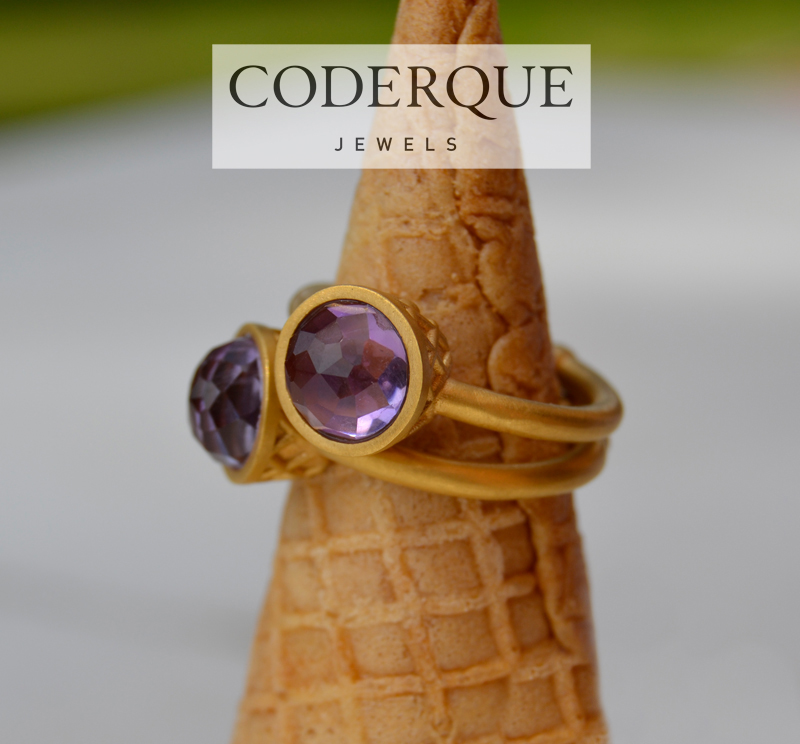
Combinación de anillos Ice-cream
Ice-cream rings combination
Anillos Ice-cream de uva (amatistas)
Grape Ice-cream rings (amethyst)


READY TO LOOK FABULOUS?

Visita nuestra tienda online o mándanos un e-mail a coderque@coderque.com

Visit our online store or mail us at coderque@coderque.com

martes, 3 de febrero de 2015

Amatista, la piedra natal de febrero – Amethyst, birthstone of February


El nombre amatista proviene del la palabra griega  (a-)  y μέθυστος (methustos), que significa “no ebrio”. La amatista era considerada como un remedio contra la embriaguez y se usaba como amuleto para tal fin, por lo que tanto en la Grecia clásica como en la antigua Roma, se tallaban copas de esta piedra.
The name  amethyst comer from the Greek  name ἀ (a-)  and μέθυστος (methustos), which means “not intoxicated”. Amethyst was considered a remedy against intoxication and was used as an amulet to that end, and because of this, both in ancient Greece and Rome they carved wine cups out from this gemstone.


READY TO LOOK FABULOUS?

Visita nuestra tienda online o mándanos un e-mail a coderque@coderque.com

Visit our online store or mail us at coderque@coderque.com

martes, 27 de enero de 2015

Piedra natal de enero; joyería con granates – January’s birthstone; jewelry with garnets.


Los granates se han usado en joyería desde hace miles de años. Se han encontrado muestras de artículos de joyería, adornos corporales y talismanes del antiguo Egipto y de la Grecia y Roma clásicas. Y se sigue usando en la actualidad.

Garnets have been used in jewelry for thousands of years. Jewelry articles, body ornaments and talismans have been found in ancient Egypt, Greece and Rome. And it is still used.


Coderque Jewels también usa esta piedra en diferentes piezas, como en este broche de la colección 100pies. Está realizado de manera artesanal en plata negra con cabujones de granates naturales.

 Coderque Jewels also uses this gemstones in different pieces, as in this brooch from the collection 100feet. It is handcrafted in black silver with natural garnets cabouchons.


READY TO LOOK FABULOUS?

Visita nuestra tienda online o mándanos un e-mail a coderque@coderque.com

Visit our online store or mail us at coderque@coderque.com

martes, 20 de enero de 2015

Piedra natal de enero, con leyenda – January’s birthstone, with a legend

Existe la tradición de regalar granates a las personas que van a emprender un largo viaje y es porque se les atribuye el poder de proteger a los viajeros ¿Sabes que leyenda inspira esta tradición?

There is a tradition to give garnets as a gift to people go are going on a long journey as it is supposed to protects travelers. Do you know where this tradition comes from?


Pues resulta que hay una leyenda que dice que Noé llevaba una lámpara con un granate en el arca que servía iluminar el arca por dentro e indicarles el camino. Y por eso se asocia a los viajeros y se supone que les trae suerte.

It turns out that there is a legend that says that Noah had a garnet lantern at the ark that lighted up the inside and helped him to steer the ark. And hat is why garnets are linked to travellers and why they are supposed to bring luck.


READY TO LOOK FABULOUS?

Visita nuestra tienda online o mándanos un e-mail a coderque@coderque.com


Visit our online store or mail us at coderque@coderque.com
martes, 13 de enero de 2015

La piedra del mes de enero – January’s birthstone


Pues esta piedra es el granate. La palabra granate proviene del latín granatum, que hace referencia a malum granatum, la granada, la fruta. Las semillas de la granada son rojas y se parecen mucho a los granates, de ahí el nombre

Well, this gemstone is the garnet. The word “garnet” comes from the Latin granatum, which refers to malum granatum, the fruit red pomegranate. The seeds from a pomegranate fruit are red and do look a lot like garnets, therefore the name.


READY TO LOOK FABULOUS?

Visita nuestra tienda online o mándanos un e-mail a coderque@coderque.com


Visit our online store or mail us at coderque@coderque.com

martes, 9 de diciembre de 2014

Origen del nombre tanzanita – Origin of the name Tanzanite


¿De dónde viene el nombre tanzanita? Pues parece bastante obvio… ¡y lo es! Efectivamente, el nombre de la piedra viene de Tanzania, país en el que fue descubierta. En 1967, un hombre de una tribu local  encontró un cúmulo de cristal con un azul muy intenso y era la gema que bautizaron como tanzanita.

Where does the name tanzanite comes from? It seems quite obvious… and it is! Indeed, the name comes from Tanzania, the country where it was discovered. In 1967 a local tribesman found a crystal cluster that had a very intense blue color and it was the gemstone that was named tanzanite


READY TO LOOK FABULOUS?

Visita nuestra tienda online o mándanos un e-mail a coderque@coderque.com


Visit our online store or mail us at coderque@coderque.com

martes, 2 de diciembre de 2014

Piedras natales de diciembre – December’s birthstones


Pues sí, por si no os parecía suficiente dos piedras natales como en el último par de meses, diciembre ¡tiene tres! Y son el circón, la tanzanita y la turquesa.
Well, in case you were thinking that two birthstones, as in the past couple of months, weren’t enough, December has three! And they are zircon, tanzanite and turquoise.


READY TO LOOK FABULOUS?

Visita nuestra tienda online o mándanos un e-mail a coderque@coderque.com


Visit our online store or mail us at coderque@coderque.com

jueves, 27 de noviembre de 2014

Piedras natales: Los colores del citrino- Birthstones: Citrine colors


El citrino es otra piedra que no tiene un único color, pero la variedad de colores en los que se puede encontrar es más limitada que otras como el topacio o la turmalina. Los colores en los que se puede encontrar esta gema se restringen al mismo rango, van desde el amarillo pálido a naranja.

Citrine is yet another gem that can present different colors, but the variety of colors that citrine displays, is not as wide as others stones like topaz or tourmaline. The colors in which citrine can be found are limited to the same range; they go from pale yellow to orange.


READY TO LOOK FABULOUS?

Visita nuestra tienda online o mándanos un e-mail a coderque@coderque.com

Visit our online store or mail us at coderque@coderque.com

martes, 18 de noviembre de 2014

Origen del nombre topacio – Origin of the name topaz


Pues resulta que en el Mar Rojo hay una isla que se llama Topazos y según el escritorcientíficonaturalista y militar romano, Plinio el Viejo, el nombre “topacio” deriva de esta isla. 
So it turns out that there is an island called Topazos in the Red Sea, and according to the Roman author, scientist, naturalist and naval and army commander, Pliny the Elder, the name “topaz” comes from this island. 


READY TO LOOK FABULOUS?

Visita nuestra tienda online o mándanos un e-mail a coderque@coderque.com


Visit our online store or mail us at coderque@coderque.com

Origen del nombre Citrino – Origin of the name Citrine


El nombre citrino viene del latín citrus, que significa “limón”, ya que uno de los colores característicos de esta piedra es el amarillo.

The name citrine derives from the latin word citrus that means lemon, because one of the characteristic colors of this stone is yellow.


READY TO LOOK FABULOUS?

Visita nuestra tienda online o mándanos un e-mail a coderque@coderque.com

Visit our online store or mail us at coderque@coderque.com

Piedras natales: Los colores del topacio – Birthstones: Topaz colors

El topacio es otra de esas piedras que se presentan en una variedad de colores bastante amplia. Hay topacios incoloro, amarillos, pardos, marrones y de diferentes tonalidades de azul.

Topazes are another stones that has a quite wide variety of colors. There are colorless topazes, yellow, dun, brown, and different blue tones.


READY TO LOOK FABULOUS?

Visita nuestra tienda online o mándanos un e-mail a coderque@coderque.com

Visit our online store or mail us at coderque@coderque.com

martes, 4 de noviembre de 2014

Piedras natales de noviembre – November birthstones


Pues este mes también, tiene dos piedras natales, que aunque pueden presentar variaciones de color, cada una tiene un color que es el más representativo y característico.

So this month, again, has two related birthstones and, although the can have some variations in color, each has a distinctive and characteristic color.

La piedra azul es un topacio y la amarilla un citrino.


The blue stone is a topaz and the yellow a citrine.


Y durante este mes de noviembre ¡os contaremos alguna que otra curiosidad de ambas!


And during this month of November, we will be giving you some funfacts about both of them!


READY TO LOOK FABULOUS?

Visita nuestra tienda online o mándanos un e-mail a coderque@coderque.com


Visit our online store or mail us at coderque@coderque.com

viernes, 31 de octubre de 2014

¿De dónde viene el nombre turmalina? – Where does the name tourmaline come from?


Pues parece que no hay del todo consenso sobre el origen de la palabra turmalina… lo que sí parece claro es que proviene del idioma singalés (etnia mayoritaria de Sri Lanka). 

It doesn’t seem to be consensus about the exact origin of the word tourmaline… but it does seems to be certain that it comes from the Sinhalese language (the main ethnic group in Sri Lanka).


Unos dicen que viene de la palabra tourmalli, que significa “piedra de colores mezclados”. Esto es apreciable a simple vista, ya que con frecuencia, las turmalinas presentan varios colores en una misma piedra. Por ejemplo, la variedad de la foto, se denomina “sandía” por la combinación de colores que recuerda a la fruta. 

Some say that it comes from the word tourmalli, that means “stone with mixed colours”. This is obvious to the plain eye, as it is common to find stones that display different colors. For example, the tourmaline of the image is is known as “watermelon” because the color combination of the stone reminds of the fruit. 


Otros dicen que viene de la palabra turamali que significa “piedra que atrae a las cenizas”. Esto no es tan fácil de ver, pero las turmalinas tiene propiedades tanto piroeléctricas como piezoeléctricas, lo que significa que al someter a las piedras a ciertas condiciones se acumulan cargas opuestas en los dos extremos que pueden atraer objetos ligeros.

Others say that the origin is the word turamali, that means “stone that attracts ashes”. Of course, this is not so easy to see, but tourmalines have piroelectric and pizoelectric properties, which means that under certain conditions, the stones accumulate opposite charges at its ends that can attract light objects as ashes.


READY TO LOOK FABULOUS?

Visita nuestra tienda online o mándanos un e-mail a coderque@coderque.com


Visit our online store or mail us at coderque@coderque.com

miércoles, 29 de octubre de 2014

lunes, 27 de octubre de 2014

Turmalinas y sus colores – Tourmalines and their colors

¡Si es que son precioooooosas!
They are sooooo amazing!


Dependiendo de las composición química, las turmalinas pueden presentar muchas coloraciones diferentes, que van desde el incoloro al negro, pasando por verde, rosa, azul… ¡Y nos encantan todas!

Depending on the chemical composition, tourmalines can have a wide range of colors, from the colorless to black, through green, pink, blue… And we love them all!


READY TO LOOK FABULOUS?

Visita nuestra tienda online o mándanos un e-mail a coderque@coderque.com

Visit our online store or mail us at coderque@coderque.com

sábado, 18 de octubre de 2014

¿De dónde viene el nombre de los ópalos? – Where does the name opal comes from?


La palabra ópalo proviene del latín “opălus” y del griego “óπαλλιος” (opallios). Estos dos términos vienen a su vez del sanscrito “upala”, que significa “piedra preciosa”. Así que es la piedra preciosa por excelencia, ¡no puede ser más preciosa! ¡Si lo dicen hasta el nombre!

The word opal comes form the Latin word “opălus” and from the Greek “óπαλλιος” (opallios). These both words come from Sanskrit “upala” which means “gemstone”. It is the quintessential
 gemstone.It doesn't get more precious than this! It is even stated in the name!


READY TO LOOK FABULOUS?

Visita nuestra tienda online o mándanos un e-mail a coderque@coderque.com

Visit our online store or mail us at coderque@coderque.com